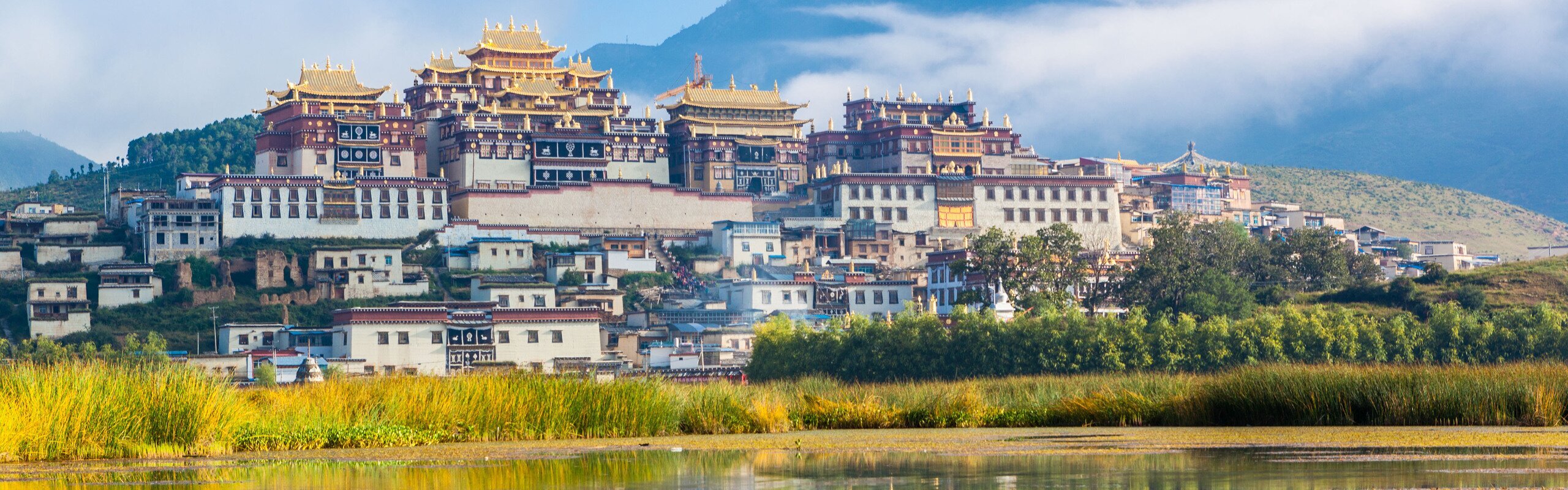

Songzanlin Monastery in Shangri-La County, also called Ganden Sumtseling Monastery or Guihua Monastery, is the largest Tibetan Buddhist temple complex in Yunnan Province. Belonging to the Yellow Hat (Gelug) Sect of Tibetan Buddhism, it is the most important monastery worshiped at by Tibetans who live in Yunnan, Sichuan, and other Tibetan areas in south central China .
Why Visit Songzanlin Monastery?
1. Built after the Potala Palace in Lhasa, Songzanlin Monastery plays an important role in the eastern Tibetan area, so it is called the Little Potala Palace. If you can't get to Tibet, then come to Shangri-La to encounter another "Potala Palace".
2. Ganden Songzanlin Monastery houses many religious items and precious Tibetan Buddhist cultural relics, such as gilded statues of Sakyamuni, palm-leaf scripts, thangka (religious tapestries), and golden lamps. Songzanlin Monastery is also called 'Tibetan Art Museum'.
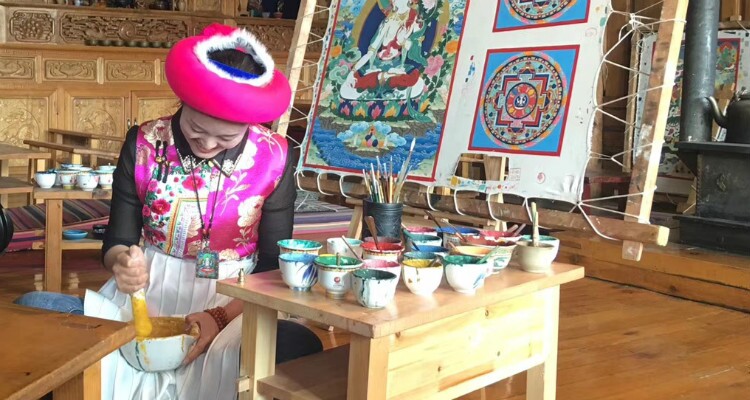 Learn to Draw Thangka in Shangri-La
3. At its height, the monastery housed 2,000 monks. Now about 700 monks live there or around it. You can discover the life of a Tibetan Lama, visit their dormitory, and to talk with them during the monastery visit, which needs to be booked in advance. Travel with Travel China to explore the mysterious life of a Lama.
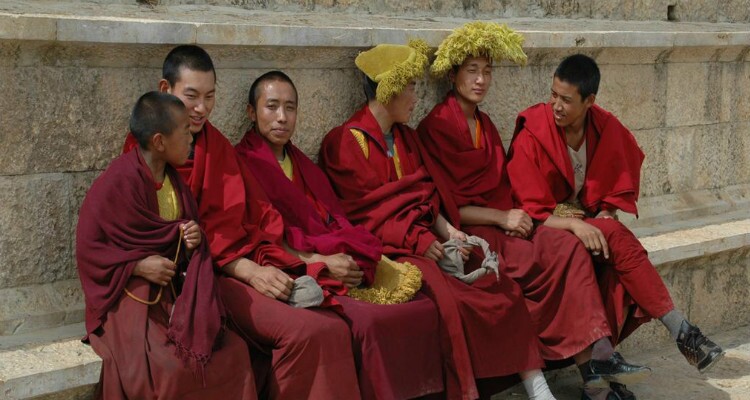 Lama in Songzanlin Mobastery
4. It is a good place to feel the strong religious and festival atmosphere. Ganden Sumtseling Monastery is built with Tibetan traditional architecture, and there are exquisite murals in each hall. Its big collection of Tibetan Buddhist treasures bring out a strong religious atmosphere.
5. In addition, the Gedong Festival is held at the monastery on month 11 day 29 of the Tibetan calendar (in December or January). Then, Tibetans from the region attend to worship. A highlight of this festival is the religious mask dances — the Cham dances, which are performed by the monks dressed up in masks and clothes to portray deities, ghosts, and animals.
Recommended tours:
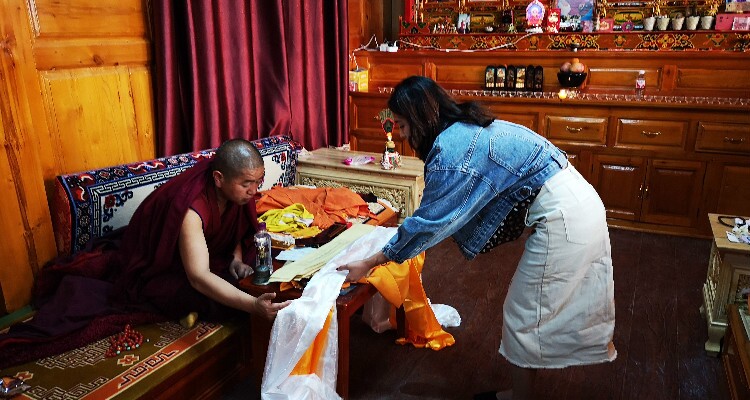 Visiting Lama in Songzanlin Monastery
How to Visit Songzanlin Monastery
Songzanlin Monastery Scenic Area is a big place, consisting of Songzanlin Monastery, Lamuyangcuo Lake in the front, Conggulong Village in its east, Xiaojiezi Village and Dongqusheng Hill in its west, and the celestial burial platform in its south.


There are two main activities that make up a classic visit of Songzanlin Scenic Area, which will take a half-day or a full day. Its opening hours are from 8am to 6pm.
Activity 1: Walk around Lamuyangcuo lake to enjoy the natural scenery and panoramic view of Songzanlin Monastery.
Activity 2: Enter the Monastery to appreciate the architecture and religious culture.
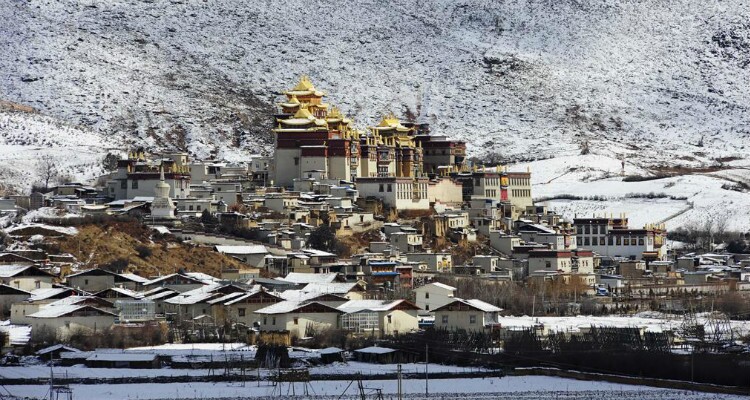 Songzanlin Monastery in Winter
Walking around Lamuyangcuo Lake
In the front of the monastery is the famous Lamuyangcuo, which means 'Virgin Soul Lake' in Tibetan. It is the "soul lake" of the famous goddess Badenglamu. Lamuyang Lake is a paradise for wild ducks, small sparrows, big white geese, as well as farm ducks, cattle, sheep, horses, and pigs. They are fed at fixed times at a fixed feeding point every day, and they get along very well, which goes with the Buddhist philosophy of harmony.
You can also walk along the lakeside boardwalk to see the natural views and appreciate Songzanlin Monastery from different angles. There are two panoramic viewing platforms by the lake for admiring the monastery: one is at the center of the lake and the other is near Conggulong Village, which is considered the best viewpoint. It takes about 50 minutes to walk around the lake.
If you want to go further, you can also climb Dongqusheng Hill to see the monastery from a more distant and elevated point.
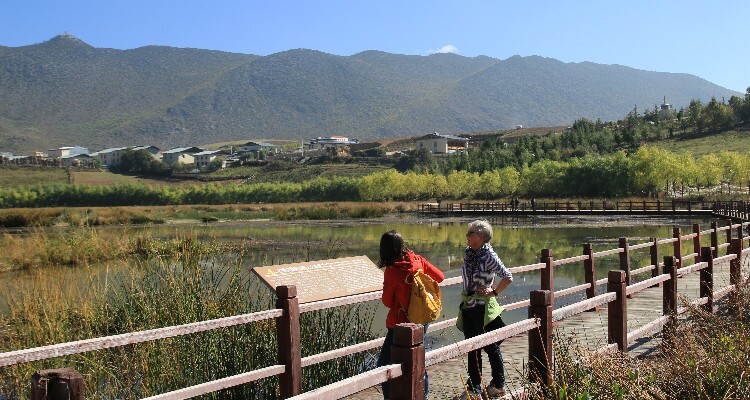 Lamuyangcuo Lake
How to Get to Songzanlin Monastery
Songzanlin Monastery is at the foot of Foping Mountain (佛屏山 Fopingshan), about 5 kilometers (3 miles) north of Shangri-La's city center in Yunnan province. You could take a taxi or public bus from Dekezong Ancient Town (just south of the city center) to Songzanlin Monastery.
However, we highly recommended that you have a private transfer there, which is more flexible and convenient. We are happy to arrange a private transfer for you and an English-speaking guide service. With a local guide's help you can learn more about the background of the monastery and discover the lamas' life there.
In addition, Songzanlin Monastery is typically visited together with other attractions on the same day such as Pudacuo National Park, which is about 40 minutes' driving away. You can have a hassle-free day trip with our private guide and driver service. Contact us to inquire about our private car and guide service.
- See a well-designed way to visit Songzanlin with our 4-Day Shangri-La Exploration Tour.


The History of Ganden Songzanlin Monastery
Ganden Songzanlin Monastery was originally built from 1679 to 1681 AD. It is said that the Fifth Dalai Lama decided the location through divination and gave it the name — Gedan Songzanlin (噶丹松赞林). During the period of the Seventh Dalai Lama (1708–57), it was expanded and became the highest organ of the region's integrated political and religious system.
The monastery we see now is not the original building of 1681. The original building was destroyed during the cultural revolution in 1966 and today we see what was rebuilt in 1982.
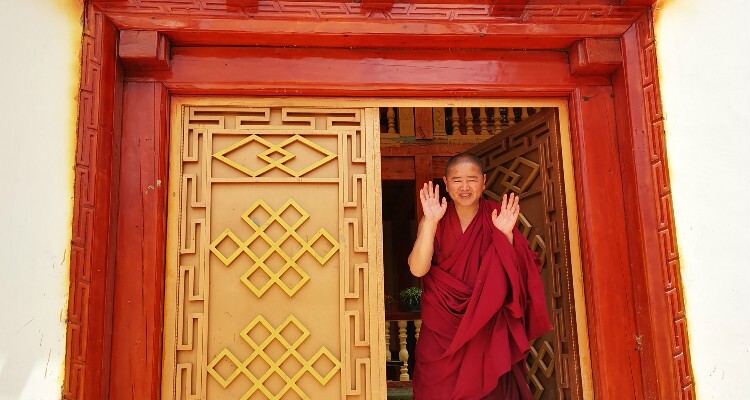 Lama in Songzanlin Mobastery
The Main Buildings of Ganden Songzanlin Monastery
Ganden Sumtseling Monastery is a large-scale, ancient-style, castle-like building, perfectly integrating the architectural features of Tibetan and Han styles. It contains three main halls (Zhacang, Jikang or Zong Keba, and Sakyamuni) and eight colleges. The entrance gate of monastery is at the foot of Foping Hill and you have to climb 146 steps to get to its main halls.
Zhacang Hall is where monks congregate to study the classics and doctrines, and to chant. It is the main building of the monastery, located in the center and the highest point of the complex. Zhacang Hall can accommodate more than 1,500 people, and the lower floor of the main building has 108 columns. This spacious and magnificent hall houses many Buddha statues and is lit by the light of numerous lamps.
Jikang Hall houses Zong Keba, who was the founder of the Gelug Sect in Tibetan Buddhism.
Besides the halls and colleges, there are also several smaller buildings, such as the dormitories for monks, which are decorated in Chinese style
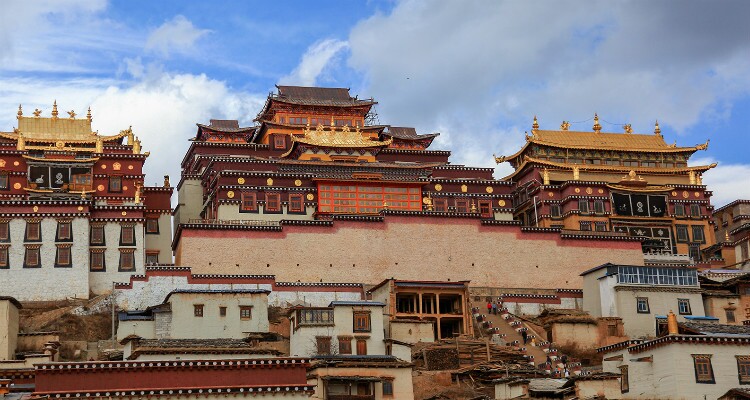 The Main Buildings of Songzanlin Monastery
Songzanlin Monastery Travel Tips
1. The altitude of the monastery is 3,380 meters (11,090 feet) and you may feel tired when climb the steps from the entrance gate to the main halls. You should walk slowly and drink more water to prevent altitude sickness.
2. Songzanlin Monastery is a religious place, and you are not allowed to wear sunglasses and hats when entering the halls. When you visit, please follow the principle of entering via the left side and exiting via the right side, thus walking in a respectful clockwise manner. It's considered disrespectful to point at the Buddha statues in the main halls with your fingers.
3. Photography is forbidden in any hall in the monastery.
4. Do not speak loudly or smoke in the monastery.

Explore Shangri-La with Travel China
Because of its awesome natural scenery and cultural experiences, Shangri-La is attracting more and more travelers. Travel with Travel China and let us create your own special Shangri-La experience based on your requirements. Here are some recommended tours that you could use as a starting point:
- 4-Day Shangri-La Exploration Tour
- 4-Day Yubeng Village Hiking Tour
- 6-Day Shangri-La, Deqin and Tacheng Adventure Tour
- 8-Day Kunming, Dali, Lijiang, and Shangri-La Highlights Tour
- See more Yunnan tours, which cover the highlights of Yunnan and exclusive programs to give you unique experiences.
Not interested in the above tour plans? We can tailor-make your own unique tour from your interests and requirements. Let us help you design your perfect trip.