
Chinese New Year is approaching. Wait, is it okay to call Chinese New Year "Chinese New Year"? Or should we call it "Lunar New Year"? Or something else?
Let's help you to figure it out.
Are Chinese New Year and Lunar New Year the Same Thing?
Simply put, Chinese New Year and Lunar New Year are not the same. Despite being related, there are a few noteworthy differences between the two. Read on to find out what they are.
The Differences between Chinese New Year and Lunar New Year
1. "Chinese New Year" is specific while "Lunar New Year" is more general.
When referring specifically to the new year event when Chinese traditions and culture are celebrated, you can refer to it as "Chinese New Year".
"Lunar New Year" is a more general term and encompasses all celebrations that mark a new year according to a lunar calendar.
In contexts outside of China, referring to Lunar New Year as "Chinese New Year" and vice versa can come off as insensitive and offensive because it ignores other cultures, all of which have their own unique traditions, beliefs, and celebrations.
2. How each Asian country celebrates and names their New Year festival is different.
Lunar New Year is celebrated in many Asian countries, including China, Vietnam, the Koreas, Singapore, and Malaysia. Though some traditions are shared, others are unique to each country's cultural identity.
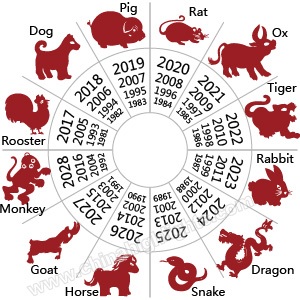
In China, Lunar New Year is called Chūnjié (/chwnn-jyeah/), i.e. 'Spring Festival', or "Chinese New Year". It is well-known for starting a new sign in the 12-year cycle of the Chinese animal-zodiac. Popular activities include putting up lanterns and Spring Festival couplets, eating reunion dinners full of auspicious food, setting off firecrackers and fireworks, and giving red envelopes. Learn more about Chinese New Year celebrations.
In Vietnam, Lunar New Year is known as "Tết" or "Vietnamese New Year". Vietnamese zodiac signs include the Cat instead of the Rabbit and the Buffalo instead of the Ox. Vietnamese people have their own traditional cake (bánh chưng) and they decorate their houses with hoađào (peach blossom trees) or hoamai (yellow Mai flower, a type of tree with yellow flowers).
In South Korea, Lunar New Year is called Seollal (/sŏllal/). During the festival, many Koreans wear traditional Korean clothing called hanbok, perform ancestral rites, worship elders, and eat traditional food such as tteokguk (soup with sliced rice cakes) and jeon (pancakes).
3. "Chinese New Year" and "Lunar New Year" can have different dates.
There are countries who share the interpretation of the Chinese calendar, such as Korea, Japan, and Vietnam, and therefore celebrate their Lunar New Year at the same (or almost same) time.
However, there are many other countries or cultures which use their own lunar calendars, with New Years falling at different times.
Mongolian lunar calendars, as well as Islamic and Jewish ones, for example, all have different months and cycles, and therefore celebrate Lunar New Year on different dates.
- Today, Chinese New Year is almost always celebrated on the second new moon following the winter solstice, therefore falling from late January to mid-February.
- Other cultures' Lunar New Year celebrations usually take place on the first new moon after the winter solstice instead.
Chinese New Year and Lunar New Year Controversies
In recent years, the topic of correct terminology of the Chinese New Year celebration, has unfortunately been creating controversy.
- Some claim that referring to the celebration as 'Chinese New Year' may be insensitive, as there are several other cultures celebrating the same festival by a different name on this date, and so it is not strictly 'Chinese'.
- On the other hand, referring to it as "Lunar New Year" inadvertently ignores other cultures' expressions of a lunar new year, which may even fall on different dates and are totally different celebrations.
The Influence of Chinese New Year on Other Lunar New Years
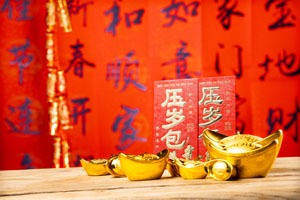
Despite some differences, many Lunar New Year celebrations around the world, whether at the same time as Chinese New Year or not, still do have many striking similarities, largely due to Chinese New Year's massive worldwide influence through the ages.
Most other Far Eastern cultures and SE Asian cultures that celebrate their own Lunar New Years incorporate many common symbols and practices associated with the Chinese celebrations, such as the use of the color red, fireworks, and firecrackers (which have an ancient Chinese cultural significance), lion dances or dragon dances, ancestor worship, and religious worship of the same historical figures or the same mythological deities or forces.
So, Should We Call It "Chinese New Year" or "Lunar New Year"?
In a casual conversation, there is no problem using the two terms interchangeably. Either way, whether you refer to it as the Chinese New Year or Lunar New Year, as long as no intentional offense is meant, it is safe to say that almost everyone will just be happy to share and celebrate the festive occasion all around the world, whatever it's called!
However, in a stricter cultural context, this can cause misunderstanding or controversy if done incorrectly. Therefore, you should treat the names as follows:
- When speaking about Chinese New Year to Chinese people or someone from a culture that doesn't traditionally celebrate a different lunar New Year, it is safe to say "Chinese New Year" or "Lunar New Year" or "Spring Festival".
- When speaking to a person with other Asian heritage about their New Year, it is best to say "Lunar New Year" or use culture-specific or local terms. For example, with Vietnamese people, use "Vietnamese New Year", or even better, say "Tết" to show respect and knowledge.