
Wuwei Region covers an area of 33,000 square kilometers and has a population of 195,0000, which is made up of 38 ethnic groups including Han, Zang, Hui and Mongolian minorities.
Wuwei, called Liangzhou in ancient times, was an important post on the ancient Silk Road. The prosperity of the Silk Road eventually brought Wuwei great business and wealth, so Weiwu was renamed "Place of Silver".
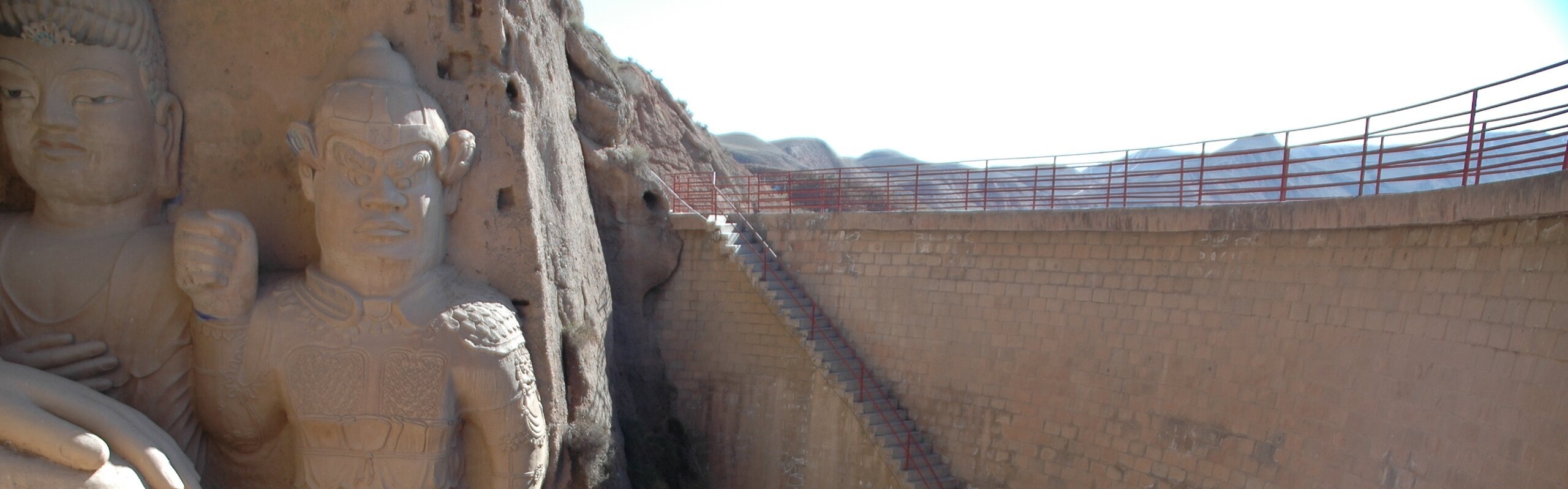
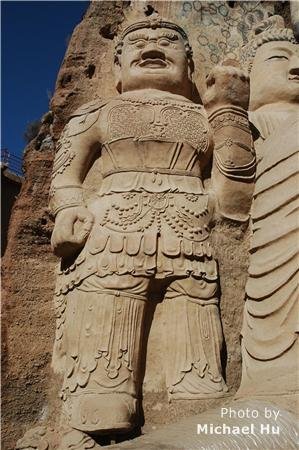
Wuwei is blessed with numerous cultural relics. The most famous attractions in and around Wuwei include Leitai Han Tombs, where the iconic Galloping Horse symbol was unearthed, Confucius Temple and West Park. Wuwei is also known for Haizang Temple, renowned as "Tiantianshan" Grottoes, which are the earliest grottoes found in China.
Location
Wuwei is located in the center of Northwest China's Gansu Province, at the south end of the Hexi Corridor. The Hexi Corridor is the passage between the Qilian Mountains and Beishan Mountain in Gansu Province. It used to be the most important route from North China to Xinjiang and then further on to West Asia. There are five major cities along the Hexi Corridor: Wuwei, Zhangye, Jinchang, Jiuquan and Jiayuguan. Wuwei is contiguous to Lanzhou, capital of Gansu Province, in the east, bordering Jinchang in the west and the Qilian Mountains in the south, and adjoining the Tengger Desert in the north.
- Area Code: 0935
- Post code: 733000
History
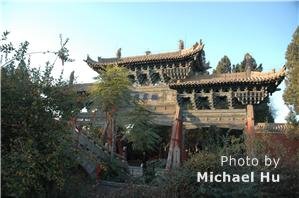
Wuwei boasts a long history and a bright culture, which is considered as "a bright pearl"on the ancient Silk Road. As early as the Neolithic Age over 4,000 years ago, ancient people lived in the Wuwei Area. Over 2,100 years ago, Wuwei was controlled by the Xiongnu Nomadic Tribe, who built Zang Town, which was the original town at today's Wuwei City.
In 121 BC, emperor Hanwudi of the Wu Dynasty dispatched general Huoqubin to conquer the Xiongnu Tribe. General Huoqubin's army defeated the Xiongnu and took over the region in Hexi Corridor. Wuwei County was then set up to govern the region.
During the Three Kingdoms Period, Emperor Wendi of the Wei State established Liang Prefecture, which means Cold Prefecture. It was so named because the region was cold all year round. Liang Prefecture for the first time became one of the thirteen prefectures of the country, after which Wuwei gained its prominent role in Chinese history.
During the East Jin and Sixteen Kingdoms Period, the country split into many different states, with the East Jin controlling much of the south and sixteen different states ruling in the north. Former Liang, Later Liang, South Liang and North Liang set up their capitals in Wuwei successively. At the end of the Sui Dynasty and the beginning of the Tang Dynasty, Ligui controlled Wuwei and set up the Great Liang Kingdom. Its role as capital for five successive states brought Wuwei more fame and significance.
In 1028 during the Song Dynasty, Dangxiang Tribe,controlled Liang Prefecture and set up West Liang Prefecture. In 1038, the Dangxiang Tribe established their Kingdom, the West Xia Kingdom, and made Liang Prefecture second in power only to its capital. Liangzhou was under West Xia's reign for about 190 years.
Food and Restaurants
amous snacks in Wuwei include flour flask, deep-fried cakes, steamed buns of the Man ethnic people, flaky of bird's nest and sand-potted rice noodles. Flour skins are particularly delicious, as are the steamed buns of the Man ethnic people, which are famous for their many varieties.
Restaurants are scattered all around the city, and at night food stalls in the streets are set up selling snacks.
Transportation
Highway
Wuwei Bus Station at West Nanguan Road is the largest bus station on the highway from Central China to the Hexi Corridor. There are buses from and to Lanzhou, Xining, Urumqi, Dunhuang and Yinchuan. Public buses 3, 4 and 6 run between the bus station and the rest of the city.
Railway
There are two railway stations in Wuwei: South Railway Station and Wuwei Station. South Wuwei Railway Station, located at Wunan Town, 13 kilometers to the southwest of the city, is larger and of more use to travelers. It is the largest railway station in the region west of Lanzhou, and an important conjunction of railways including the route from Lanzhou to Urumqi in Xinjiang Province, and the Wuwei-Zhongwei Railway. From Wuwei, there are trains heading to Lanzhou, Yinchuan, Urumqi, Beijing and Shanghai.
Weather
Wuwei, located between the Tengger Desert and Badain Jaran Desert, has a temperate continental climate. The terrain of Wuwei falls into three geographically distinguished parts: desert in the north, plains in the center and mountains in the south. Climate in the north is arid, characterized by little rain, heavy winds and storms all year round. The plains in the center have relatively comfortable weather. It is therefore the crop and fruit production base of the province. The mountainous region in the south, where the Qilian Mountains are located, is humid due to its dense forests.
The annual average temperature in Wuwei is around 8 °C (46 °F), and the average rainfall ranges from 60 to 610 millimeters.
The best times to visit Wuwei are summer and autumn. Compared with areas in East China, Wuwei is very dry all year round. Summer and autumn are the best seasons for visitors who are not used to the arid weather as most of the rainfall comes during this period.