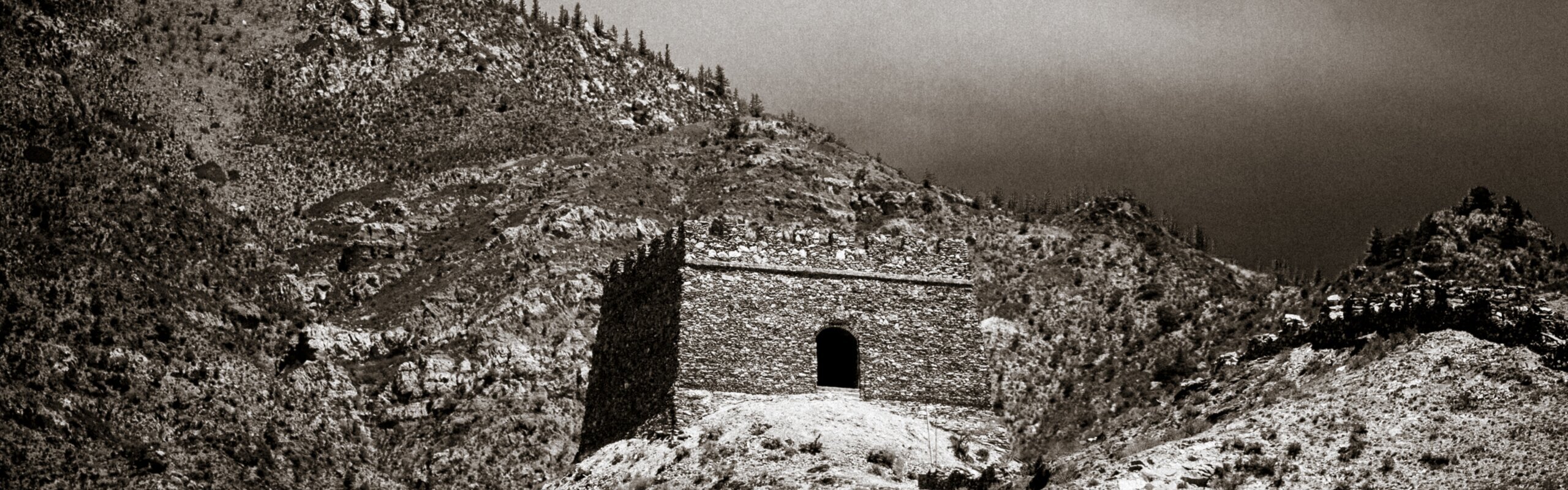

In remote north China, Ningxia (like Zhangjiakou) boasts of being a Great Wall Museum. The Great Wall was built there during many periods of history: by the Warring States, and the Qin, Han, Sui, Jin, and Ming dynasties, from 475 BC to 1644 AD.
The total recorded length of the Great Wall in Ningxia is 1,507 km (668 miles) long, with 517.9 km (355 miles) of still visible wall, including 589 watch towers, 237 beacon towers, and 25 forts.
Quick Facts about Ningxia Great Wall
- Chinese: 宁夏长城 Níngxiàchángchéng /ning-sshyaa channg-chnng/
- Location: North China
- History: over 2,000 years
- Length: 1507 km (668 miles) recorded, 517.9 km (355 miles) visible
- Built by several dynasties including Qin, Han, Sui, and Ming
- Built to defend China against attack from Mongolians
Structure of the Ningxia Great Wall
The rammed-soil Great Wall in Ningxia Province made use of local materials, ranging from one to three meters (3–10 feet) high, with flanking towers protruding from the wall on average every 200 to 300 meters. Beacon towers, barracks, and forts were also built at the important passes and mountain tops.
- 1-Day Beijing Layover Tour
- 3-Day Jiankou to Jinshanling Great Wall Hiking Discovery Tour
- 2-Day Jinshanling Great Wall Hiking and Camping Tour
Great Wall of Various Dynasties
The Qin State Great Wall
The oldest section of Great Wall in Ningxia Province, the Great Wall of the State of the Qin, was built in the Warring States Period (475–221 BC). It is 200 kilometers (120 miles) long, was renovated and extended during the Qin (221–206 BC) and Han (206 BC – 220 AD) dynasties, and was fully restored during the Ming Dynasty (1368–1644).
The Qin Dynasty Great Wall
Based on the Great Wall of the Warring States Periods, the Qin Dynasty (221–206 BC) renovated the Great Wall in the Guyuan area. The Great Wall was also extended northward and westward using the Yellow River and the army stationed on the Great Wall.
The Han Dynasty Great Wall
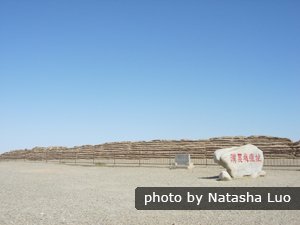 The Han Dynasty Great Wall
The rulers of the Han Dynasty (206 BC – 220 AD) continued to use the Great Wall built by the Qin Dynasty to defend against the Mongolians.
It was not until the reign of Emperor Wudi (156-87 BC) of the Han Dynasty that China's territory grew, and new Great Wall was built stretching as far as north Ningxia.
The Sui Dynasty Great Wall
Emperor Wendi of the Sui Dynasty (581–618) ordered widespread building of the Great Wall, to defend borders against invaders from the north, soon after his succeeding to the throne in 581. His contribution was the 90-kilometer (56-mile) Great Wall section along the eastern border of today's Ningxia.
- 1-Day Beijing Highlights Private Tour
- 1-Day Jinshanling Great Wall Hiking Tour
- 2-Day Jiankou Wild Great Wall Camping Tour
The Ming Dynasty Great Wall
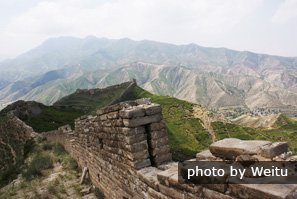 The Ming Dynasty Great Wall
Also known as the border wall, the Great Wall of the Ming Dynasty (1368–1644) in Ningxia is composed of 4 sections: the West Great Wall, the North Great Wall, the East Great Wall, and the Guyuan Inner Great Wall.
The 400-km (249-mile) long West Great Wall stretches from Jingyuan County in Gansu Province to Helan Mountain in the north of Zhongwei Prefecture, Ningxia Hui Autonomous Region.
The North Ningxia Border Ming Great Wall
The Great Wall was built up to the north border of Ningxia during the Ming Dynasty, and is divided into three sections: the Old North Great Wall Section, the Helan Mountain to Yellow River West Bank Section, and the Long Embankment Section in Taole County.
The well-preserved main body of the North Great Wall section in Hongguozi Town, is 5.8 km (3.6 mi) long. 3.7 km (2.3 mi) of which is rammed soil on the plains, and 2.1 km (1.3 mi) of which is of stone in the mountains.
The Helan Mountain (Zao'ergou 枣儿沟) to Yellow River West Bank Section was built in the 10th year of the Emperor Jiajing's reign (1531). This section served as north pass gateway. It was 20 kilometers (12 miles) long, but only a few damaged soil walls remain today due to desert erosion.
The Long Embankment Section follows the Yellow River south to Pingluo County, where it joins the East Great Wall. The Yellow River's Ningxia-side levees served as the Great Wall, hence it was called the Long Embankment.
The East Ningxia Ming Great Wall
The East Great Wall starts at Hengcheng in Lingwu County, running east through Yanchi County, and ending in Dingbian County in Shaanxi Province. It was built in two parts: the Hedong Wall and the Hengcheng–Huamachi Wall.The first part, built in the 10th year of Emperor Chenghua (1474), was the Hedong Wall (the 'River East Wall'). 193 km (120 mi) long, numerous "品"-shaped deep ditches were dug outside for defense.
It was rebuilt in the 10th year of Emperor Jiajing (1531) as it had suffered great damage.
The second part, 180 km (112 mi) long, started in Hengcheng Village in Lingwu County and ended at Huamachi in Yanchi County Town. It was seriously damaged in Xingwuying Village in Yanchi County, therefore a 53-km (33-mile) ditch was dug along each side of the wall during the 16th year of Emperor Jiajing's reign (1537).
The Guyuan Inner Ming Great Wall
The Ming-era Inner Great Wall in Guyuan was built on the very site of the Qin-era Great Wall, stretching west-east for about 200 km from Xiji County to Pengyang County. It was built under the order of Emperor Zhaoxiang (325-251 BC to defend North China from the Mongols, and still remains now.
Where to See Great Wall in Ningxia?
The ancient Great Wall remains can be seen all over Ningxia, but mostly in the mountains of Guyuan.
Nearby Attractions
How to Get There?
By air: Fly from Beijing to Yinchuan (about 2 hours), then to Guyuan (about one hour).
- 2-Day Great Wall Mutianyu-Simatai Day-Night Tour
- 1-Day Jiankou to Mutianyu Great Wall Hiking Tour
- 5-Day Badaling to Huangyaguan Great Wall Hiking Tour
Visit Ningxia's Great Wall Sections with Travel China
If you want to visit the Great Wall sections in Ningxia, Travel China can help you. Contact us with your interests and requirements, including anywhere else you'd like to visit, and we will tailor-make your China tour.