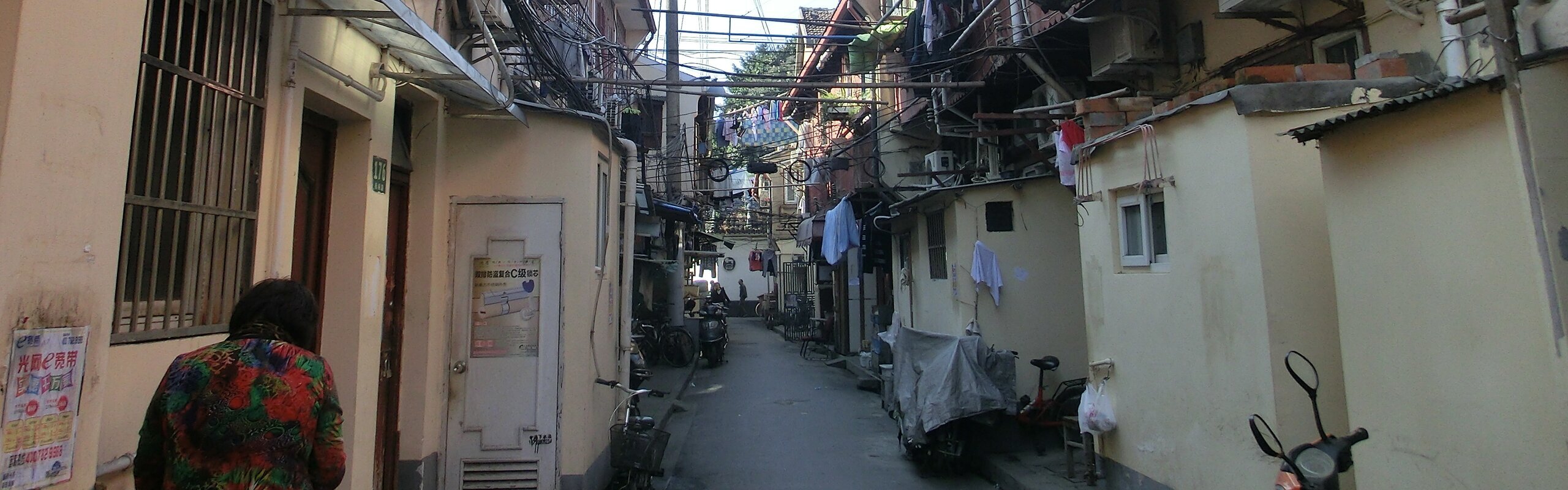

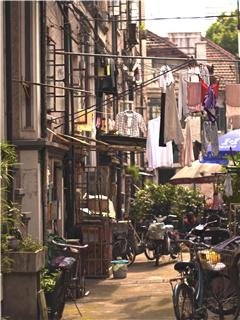
Sheets, chairs, grandparents and pets, everything goes outside for a sunbath in Shanghai's lilongs. Tucked away behind the vibrant commerce of central Shanghai's boulevards are these century old alley communities pulsating with an authentic Chinese rhythm unfortunately extinguishing in the country's urbanization fever.
Plants and flowers poking out of every corner, the chirping of pet crickets coming mysteriously from windowsills covered in kitchen utensils; racing pigeons flying out of balcony cages flock back to neighborhoods splashed in the living watercolor of laundry hanging everywhere. Lifetime neighbors bent over a game of majiang, and the sound of fog horns carries from junks on the Huangpu River.
Steeped in history and beaming in the face of the imposing ultra modernity all around them, the lilongs are Shanghai's big, happy Chinese heart.
Some Historic Background
After the Taiping Uprising (1864) thousands of Chinese flooded Shanghai's International Settlements seeking refuge.
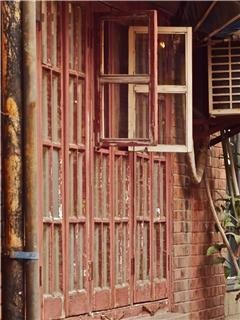
Starting from the 1840s foreign sponsors took the opportunity to begin the construction of the Lilongs to accommodate the overflow of migrants. Inside, and yet a world away from the city's high-octane center, enclosed behind shopfronts the first lilongs were constructed within a city block, a hybrid of the English row-house and the traditional Chinese courtyard.
It didn't take long for the lilong style to fall into favor, and with growing demand for mass commodity housing hundreds were built. Due to its ability to confine itself from the urban framework in which it was formed, it was an arrangement that provided both communal connection and environmental haven to its residents - a sub-center that was protected from the commotion of the city, dividing domestic spaces within living quarters and internal courtyards, and public life and socializing on common alleys.
1840 to 1940 Lilong Evolution
From 1840 to 1940 the Lilongs went through several evolutions. The two-story shikumen lilongs; small, narrow, alley constructions with stone arch entrances, almost entirely gone today, were progenitor to three variations of lilongs presently still visible around People's Square and predominantly in the Former French Concession.
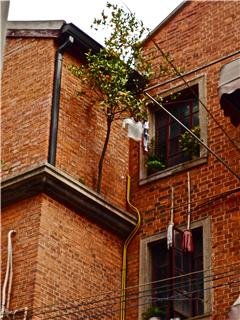
The "new-type" lilong was built for farm hands from nearby villages pouring into Shanghai after the fall of the Chinese Empire in the early 1900s, and the "garden" lilong and "apartment" lilong were for the country's well to do in the 1920s, 30s, and early 40s.
In their varieties, these housing clusters were homes to everyone from coolies, to small merchants that saw daily visits from the foreign residents of the concessions, the occasional foreigner, as well as to a conglomeration of some of the country's most important artists, scientists, politicians and even revolutionaries that proved pivotal to the communist overthrow. By the last years of their construction in the 1940s, the Lilongs covered up to 60% of the city.
After the Sino-Japanese War (1945), the nation and the wealthy port city of Shanghai fell into economic depression, and by the beginning of the second half of the century the style fell out of favor for more Soviet inspired architecture. The lilongs that survived the cultural revolution and urbanization coexist side-by-side with the contemporary sky-piercing Shanghai, accentuating the city's cyberpunk metropolis feel. Today, like in the past, they evolve with a constantly growing city, taking in new residents from all channels.
Unique to Shanghai, showcasing heaps of old China charm, and a brew of international styles that the city absorbed as its own, the Lilongs are must visit sites in the city. Below we have compiled a list of some of the best, exemplifying their variations.
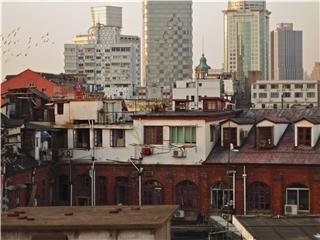
Huaihai Fang
This large compound in between Huahai, Maoming, and Nanchang roads is one of the "new-type" lilongs introduced to Shanghai in the 1920s, with subsidiary lanes and space for cars. Built in 1925, the compound has a good atmosphere; and, as if all the greenery in front of houses wasn't enough, it even has a public bonsai nursery near the entrance on Maoming Lu. Many of the country's intellectuals and artists called the alleys of this lilong home. Ba Jin, author of "Spring, Autumn and Winter Nights", lived at number 59, and at number 64 Xu Guangping, wife of the author Lu Xun, where she prepared her husband's last works.
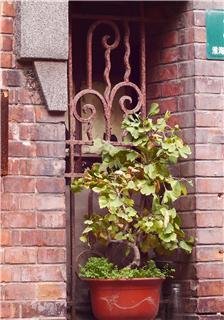
Lao Yuyang Li
In this small shikumen-style lilong, typical of the early 1900s, lived many of China's key revolutionaries from both the KMT and the Communist League who made it the base for their political activities, such as Li Hanjun and Deng Xiaoping. Quiet and not lacking in local charm, it's a must see for history enthusiasts.
- 100 Nanchang Road
Another lilong with similar history, nearby on 567 Huahai Lu, "Xi Yuyang Li", housed the central office of the China Socialist Youth League, who inconspicuously called themselves the "Foreign Language Workshop". It was the fountainhead of the communist party's leadership. The strategies concocted here amplified into a revolution that changed the country.
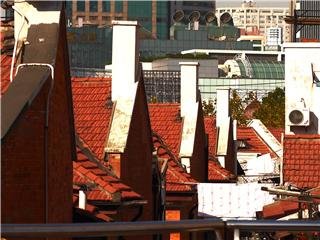
Citè Bourgogne
A great example of the new, and last, style of lilong, it has remained quite intact. It is interesting to see the kind of space that foreign developers thought of when building for future Chinese residents, taking elements from European residential areas and traditional Chinese houses, making something unique not only to Shanghai's need at the time to add housing to a condensed area, but in this case, for Chinese social habits. A public courtyard is still used today as a meeting point inside the compound where people can chat.
- 172 South Shanxi Road
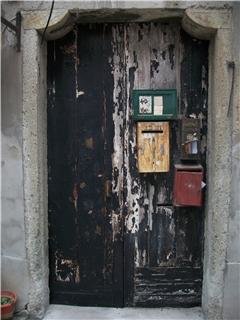
Changle Cun
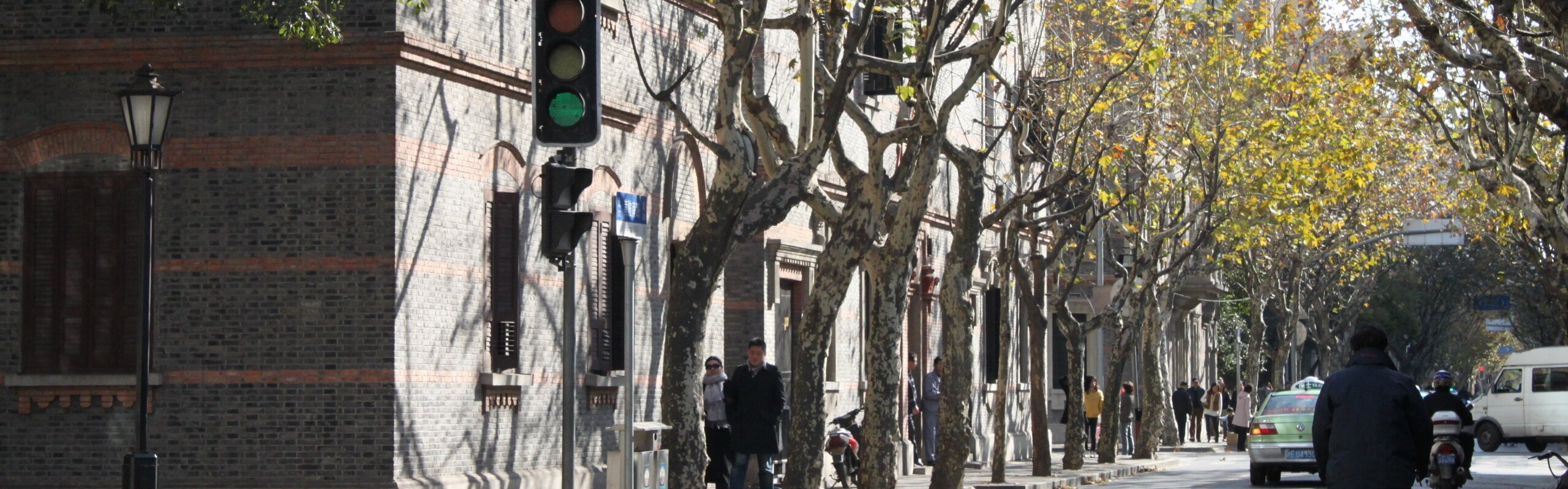
Hiding behind South Shanxi Road, an old avenue that goes through the heart of the Former French Concession, is one of the most beautiful lilongs in the city.
The position of the compound makes for great airflow, and each unit basks in generous amounts of natural light; so much so that father of the modern Chinese cartoon Feng Zikai called his home in Changle the "sun and moon chamber". (Well worth a visit is Zikai's former home, number 93, lane 39, turned into a museum, on the 2nd and 3rd floors. Free entrance, open Wednesday–Sunday, 10:00am–4:30pm.)
Displaying skillful design inside and out, and lots of greenery, this impeccably kept "garden" lilong is a real delight to walk through.
- 39–45 South Shanxi Road
Jing'an Villa
This can't be a lilong article without Jing'an Villa on East Nanjing Lu. By far the best preserved new-type in Shanghai, it seems as though there may be strict regulations as to the kinds of renovations the lucky tenants can make to their apartments. The biggest lilong in Shanghai, walking inside from the commercial Nanjing Lu, and looking back at the skyscrapers from inside it provides for a really bizarre Asia of contrasts experience.
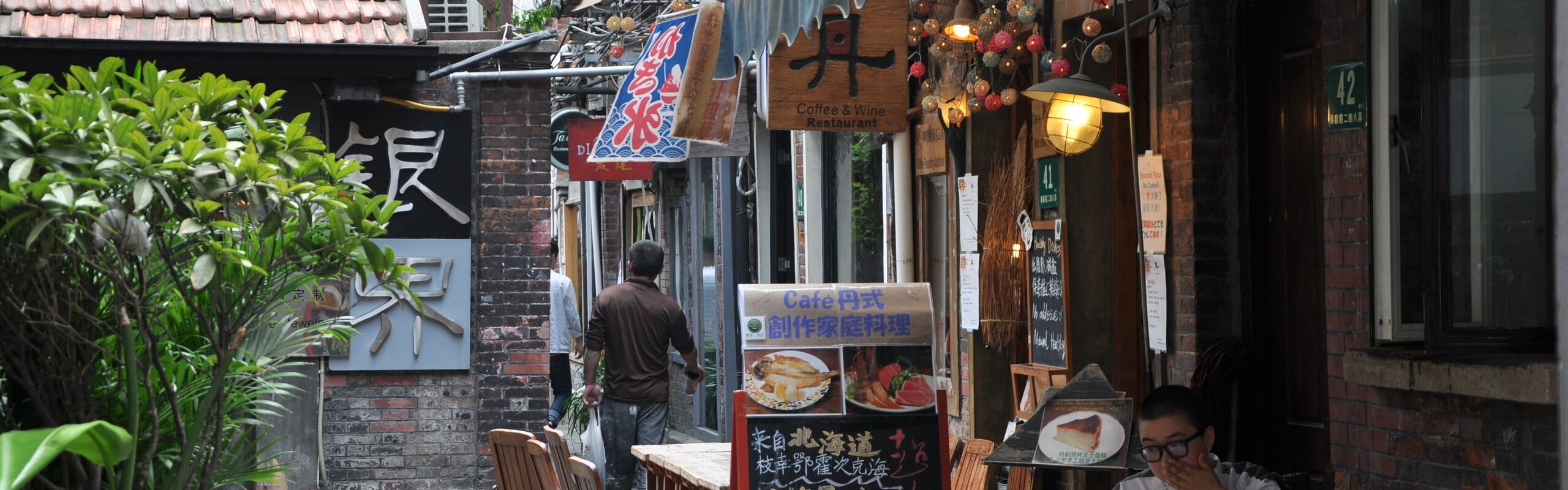
Not a single white aluminum sliding window in sight, this lilong remains delightfully original, looking much as it did when it was built in 1932, with original doors, tiles, stairs, plaster on the ceilings, reliefs and wrought iron decorating the gates. This quiet neighborhood has also secretly taken on a subdued small cafe and boutique shop craze inside its alleys.
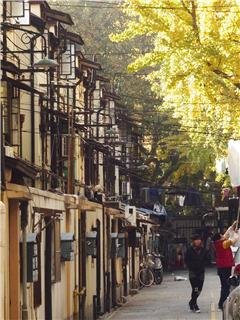
Smelling the cooking wafting from open windows during your exploration, you can definitely work up an appetite, but not to worry as the lilong units facing the main drags have a variety of dining and drinking options, from hole-in-the-wall to top-notch. It's a great area to try out the city's growing coffee culture.
- 1025 East Nanjing Road
Shanghai Tours
Explore the city's historic heart in the alleys of Shanghai's Lilongs with one of Travel China' Shanghai Tours, or opt for customizing a unique tour to combine lilongs and other nearby attractions.