
Temple of Heaven in Beijing: Your Essential Visiting Guide

Temple of Heaven in Beijing: Your Essential Visiting Guide

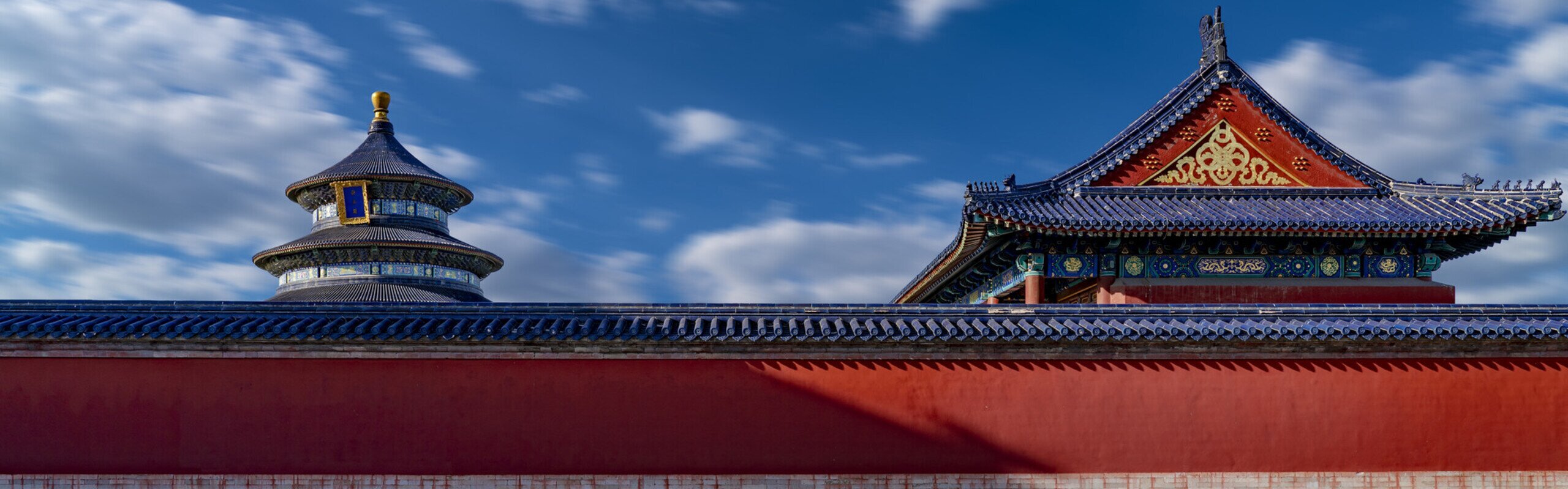
The Temple of Heaven, originally constructed in 1420 during the Ming Dynasty's Yongle era, was initially named the Temple of Heaven and Earth. It served dual purposes: worshiping both Heaven and Earth.

However, in 1530, during the Jiajing reign, the functions were separated, and it was renamed the Temple of Heaven. Over the centuries, 22 emperors from the Ming and Qing dynasties conducted 654 grand ceremonies here to honor Heaven.

As a local Beijing tour guide, I've had the pleasure of visiting the Temple of Heaven with guests around 150 times each year. Here are some insider tips to make your visit both enjoyable and memorable.

Facts about the Temple of Heaven:

  • Tickets: 15 RMB from April 1st to October 31st; 15 RMB from November 1st to March 31st
  • Reservation: Tickets can be booked in advance via the official mini-program using your passport, or purchased on-site.
  • Opening hours: 6:00 am - 9:00 pm from April 1st to October 31st, and 6:30 am - 9:00 pm from November 1st to March 31st
  • Location: About 5 kilometers from the south gate of the Forbidden City
  • Suggested visit duration: 1-2 hours
  • Construction and function: Built in 1420
William Zhang, Beijing Tour Guide
William Zhang
10 Years as a Local Guide in Beijing

Hello, I'm William. I've been working as a tour guide of Travel China for about ten years. It's always a joy for me to share the beauty and history of Beijing. Whether you're visiting well-known sites or exploring quieter corners, Beijing will definitely offer you an unforgetable experience.

Content Preview

What's Inside the Temple of Heaven?

The Temple of Heaven is divided into two main areas: the Inner Altar and the Outer Altar. The Inner Altar houses the primary ancient structures and attractions, while the Outer Altar features auxiliary buildings and ancient tree groves.

When visiting the Temple of Heaven Park, don't miss the Hall of Prayer for Good Harvests and the Circular Mound Altar.

Circular Mound Altar
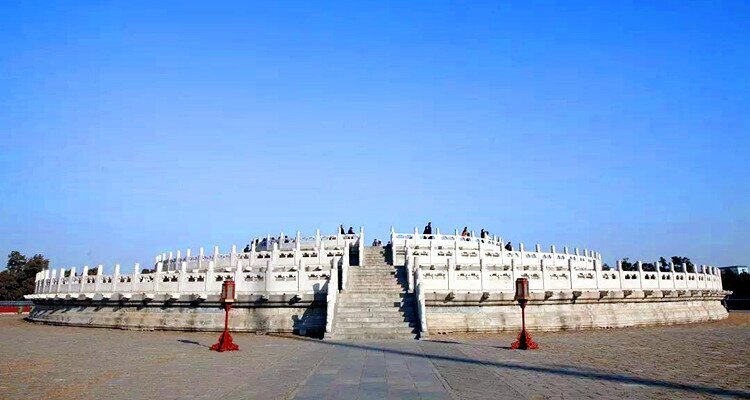
Circular Mound AltarCircular Mound Altar

Located at the southern end, the Circular Mound Altar was where the emperor performed the winter solstice ceremony to honor Heaven.

The Circular Mound Altar consists of three levels, each with 9 steps. In the center of the topmost level is the Heavenly Heart Stone, surrounded by fan-shaped stones representing the God of Heaven living in the nine levels of Heaven.
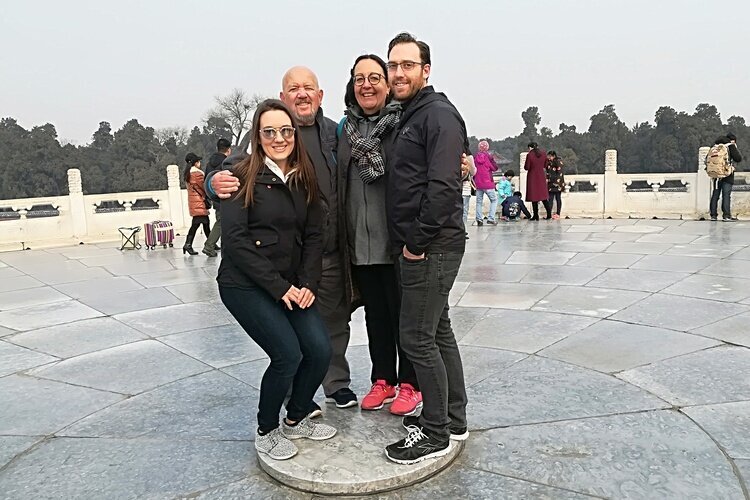
Our guests stood on the Heavenly Heart StoneOur guests stood on the Heavenly Heart Stone

It is like a magical stage! When you stand on the special Heavenly Heart Stone and speak, your voice echoes back in a beautiful way, as if the whole place is talking with you.

This happens because the stone is right in the center, and the sound bounces off the walls and back to you super quickly—so fast that you can't tell the difference between your voice and the echo. This makes your voice sound big and musical, almost like a choir.

Long ago, rulers thought this was a sign of everyone agreeing with them, like a heavenly message!

Hall of Prayer for Good Harvests
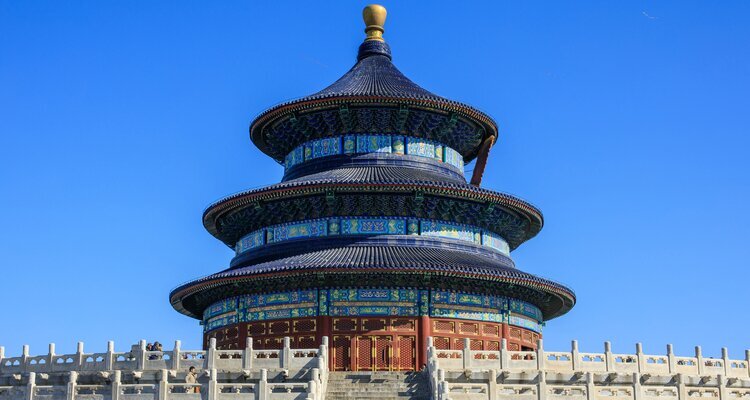
The Hall of Prayer for Good HarvestThe Hall of Prayer for Good Harvest

Situated at the northern end, it was used during the Ming and Qing dynasties for ceremonies praying for good harvests during the first lunar month.

It features 28 pillars symbolizing the 28 constellations used in ancient Chinese agriculture. The 4 central pillars represent the four seasons, the 12 inner pillars symbolize the months of the year, and the 12 outer pillars represent the 12 traditional Chinese hours, collectively embodying the 24 solar terms.
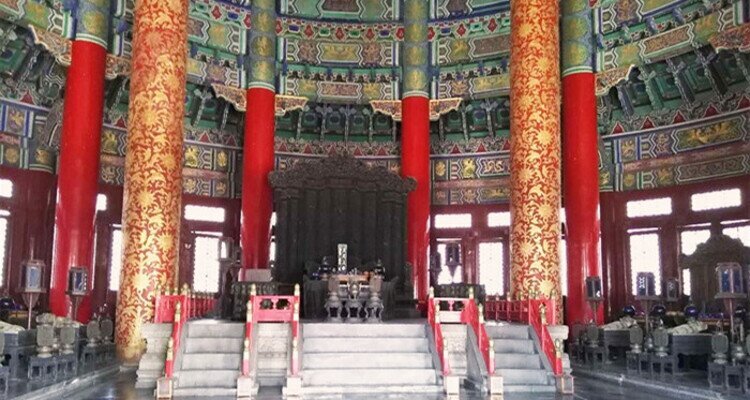
Temple of HeavenThe tablet of the Emperor of Heaven and the 4 central pillars inside the Hall of Prayer for Good Harvests

Recommended Visit Route
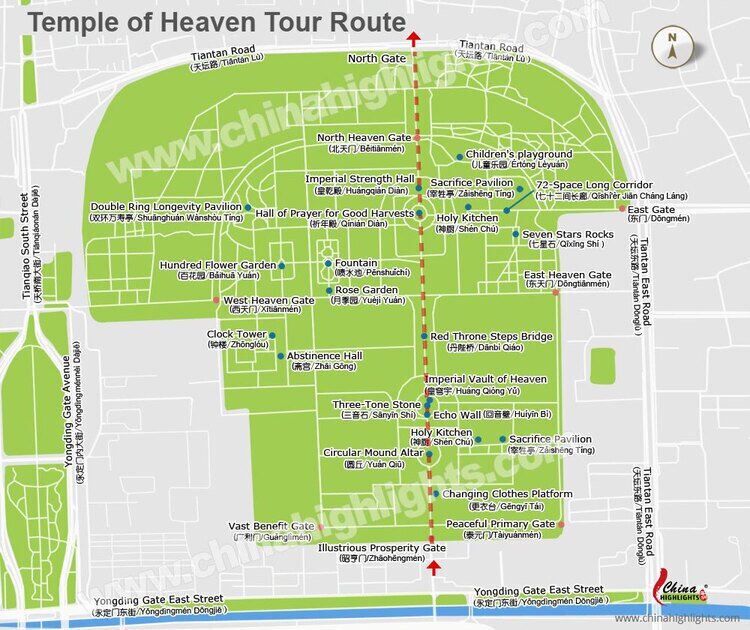
Temple of Heaven tour route

I suggest starting your visit to the Temple of Heaven from the east gate.

After entering the east gate, walk straight for about 100 meters. On your north side, you'll find an area with fitness equipment where locals exercise in the morning.

Here, you can see retired elderly people doing exercises such as gymnastics and Tai Chi. Feel free to communicate with the locals about fitness practices.
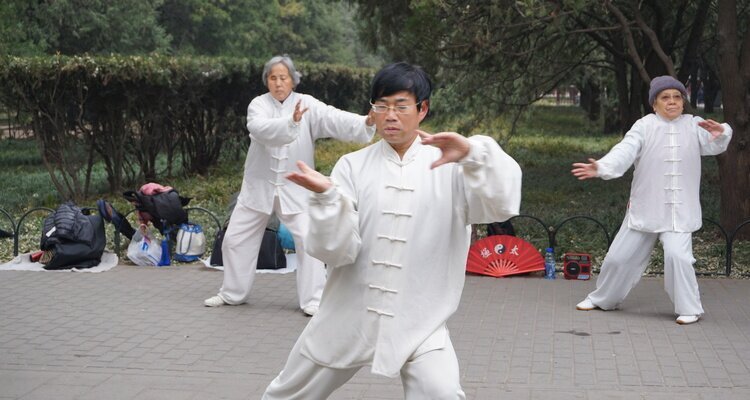
Locals practicing Tai ChiLocals practicing Tai Chi in the Temple of Heaven

Continuing west, you'll see a 72-section long corridor connecting the Temple of Prayer for Good Harvests, the Divine Kitchen, and the Sacrificial Pavilion Buildings. On the south side of this corridor is a seven-star stone composed of 8 stones.

There's a story behind it: In 1530, Emperor Jiajing of the Ming Dynasty thought the area was too empty, so a Fengshui master suggested placing seven stones to regulate geomantic omens.

During the Qing Dynasty, an additional stone was added to represent Changbai Mountain, symbolizing the unity of the Manchu and Han people.
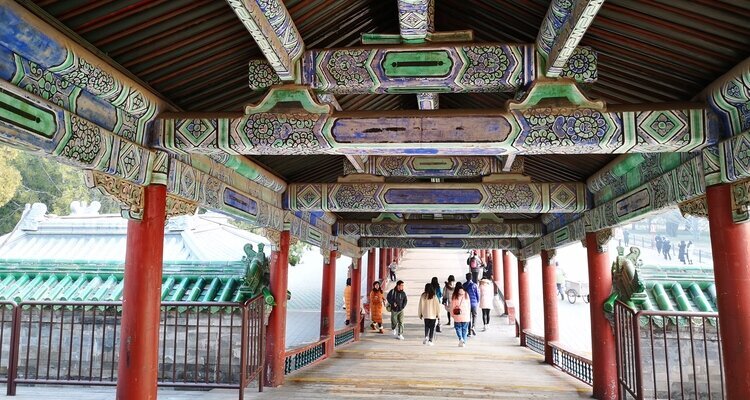
72-section long corridor72-section long corridor

From here, head west to enter the Hall of Prayer for Good Harvests at the western end of the long corridor.

After visiting the Hall of Prayer for Good Harvests, exit through the south gate and walk along the 360-meter-long and 29-meter-wide Haimian Avenue, also known as Danbi Bridge. The north side of Danbi Bridge is higher than the south, symbolizing that the sky is higher than the earth.

The bridge deck is divided into three paths:

  • The middle path is Shendao, taken by the Jade Emperor's divine tablet;
  • The left side is the imperial path, taken by the emperor;
  • The right side is the Wang Dao path, taken by the imperial family, relatives, and officials.
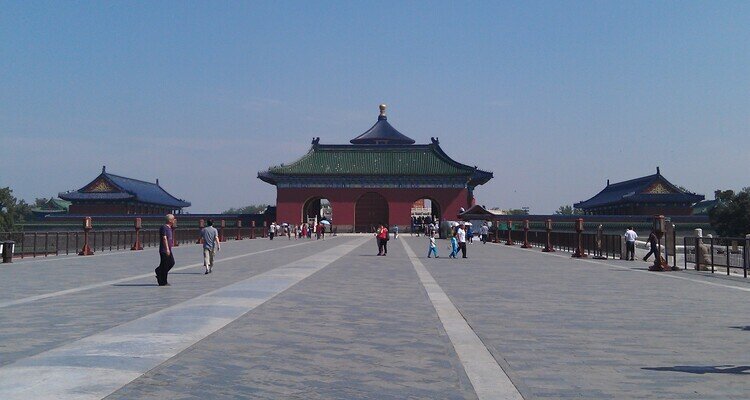
Danbi BridgeDanbi Bridge

On the south side of Danbi Bridge are the Echo Wall and Circular Mound Altar. The Echo Wall is circular, and it's said that people can hear each other's echoes clearly when speaking from behind the left and right halls.
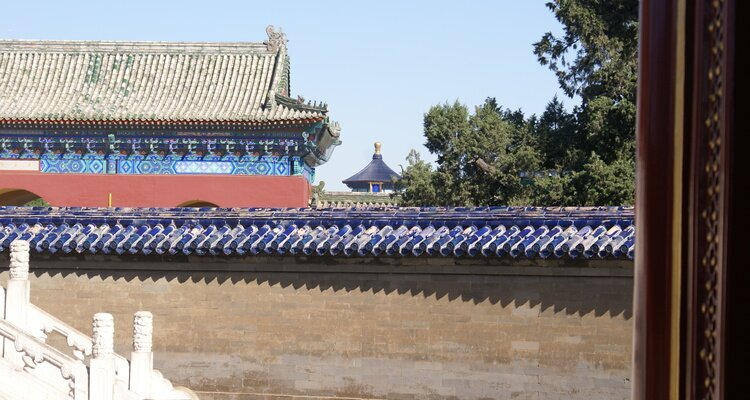
Echo WallEcho Wall

In the courtyard of the Echo Wall is a round building called the Imperial Vault of Heaven, where signs of the gods are placed on regular days. During ceremonies, these signs are moved to the Circular Mound Altar.
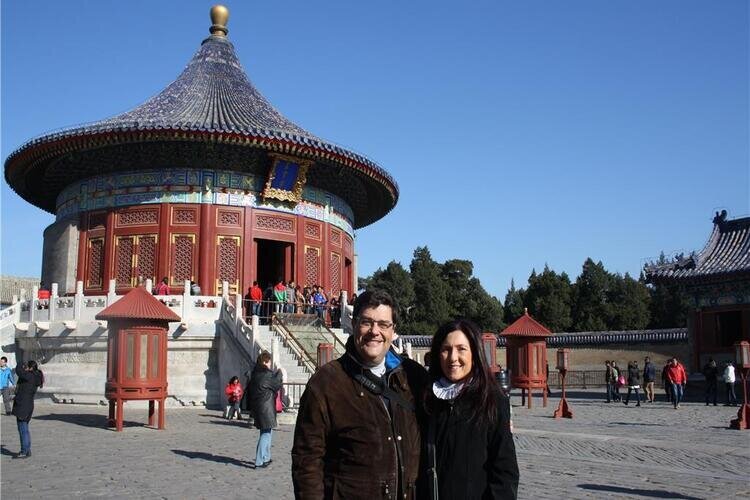
Our guests visited the Imperial Vault of HeavenOur guests visited the Imperial Vault of Heaven

Leaving from the south side of the Circular Mound Altar takes you to the south gate of the Temple of Heaven Park, concluding your visit.

Recommended Temple of Heaven Tours

Feel free to contact us if you want to customize or adjust the itinerary.

How to Get to the Temple of Heaven

There are many ways to reach the Temple of Heaven, including by bus or taxi. However, the most convenient way is to take Subway Line 5 and get off at the East Gate Station of the Temple of Heaven.

For flexibility and comfort, we also recommend booking a private tour with a private car and guide. Our professional guides will share interesting stories about each building and answer your questions during the trip.

Best Times to Visit
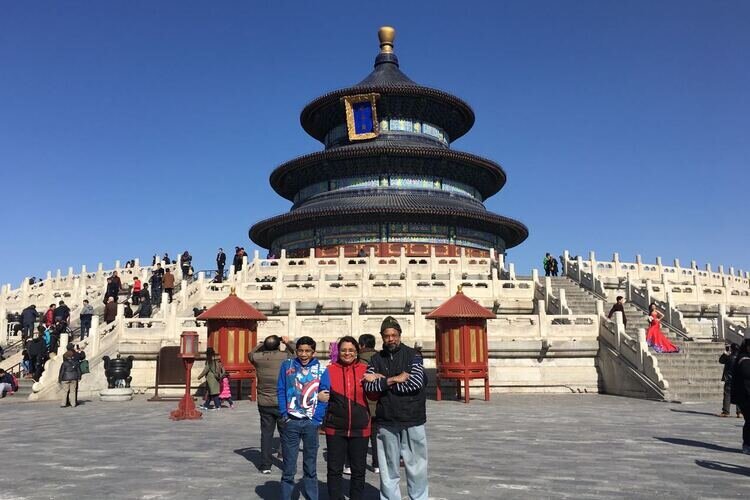
Temple of HeavenVisit the Temple of Heaven in spring

The best seasons to visit the Temple of Heaven are spring and autumn, specifically May or October, when the weather in Beijing is neither too hot nor too cold.

The best time of day is from 7:00 to 9:00 in the morning, as you can see elderly people doing morning exercises.

Learn more weather details on Best Times to Visit Beijing.

Visiting Beijing with Travel China

Discover the best way to explore Beijing with Travel China. Immerse yourself in the city's rich history and culture, guided by our expert tour leaders.

Experience the unique charm of destinations like the Temple of Heaven, and hear the captivating stories behind each site. Choose Travel China for an unforgettable travel experience that will make your Beijing visit truly memorable.
Beijingのその他の観光スポット

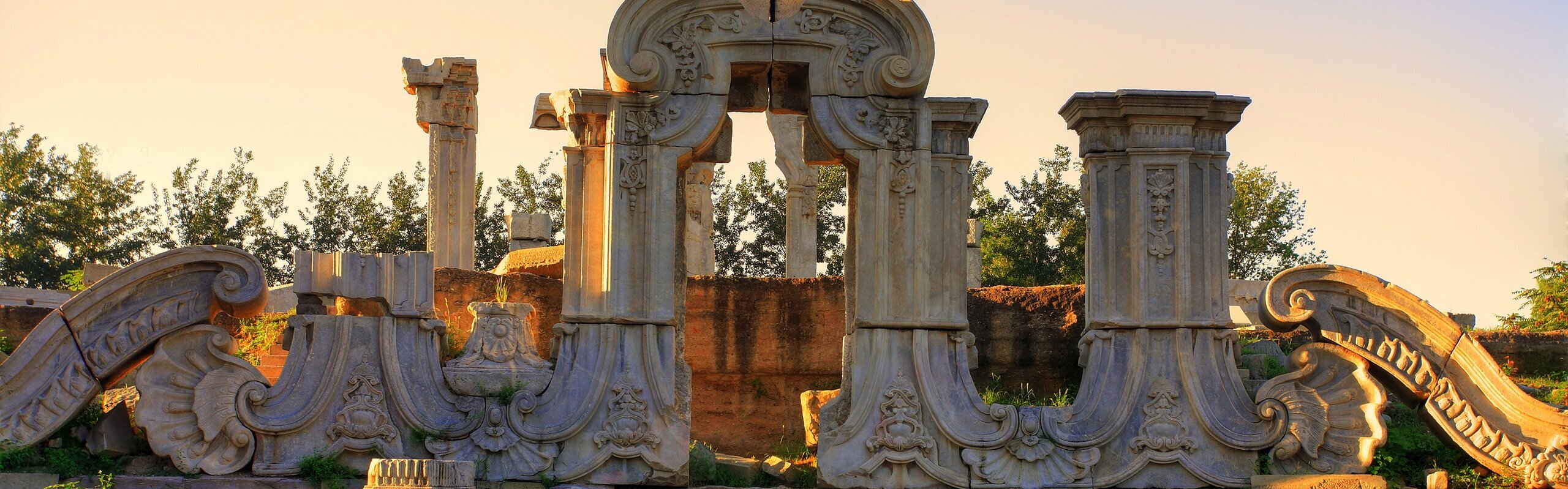
Old Summer Palace Beijing: Local Tips & Highlights

Old Summer Palace Beijing: Local Tips & Highlights

Explore the Old Summer Palace in Beijing with local tips on routes, highlights, and visiting times. Learn its tragic history and plan your trip with expert insights.

Nanshan Ski Resort—Best Day Trip for Skiing Near Beijing

Nanshan Ski Resort—Best Day Trip for Skiing Near Beijing

Nanshan Ski Resort is one of the most accessible and well-equipped resorts in northern China. It's a good choice whether you're skiing with kids, trying the sport for the first time, or looking to keep your skills sharp.

Wudaoying Hutong: A Visitor's Guide to City Walks, Dining...

Wudaoying Hutong: A Visitor's Guide to City Walks, Dining...

Wudaoying Hutong is a great stop for traveller and Beijing-dwellers alike, holding all kinds of Western comforts, from codde to fast food, to slightly ,ore fancy dining, and even Mexican food.

Beijing Shougang Park: Things to Do & How to Visit

Beijing Shougang Park: Things to Do & How to Visit

Beijing Shougang Park epitomizes China's steel industry, and is a successful example of urban renewal in China. It integrates industrial, Winter Olympics, and innovation culture, transforming into a vibrant new cultural landmark of China's capital.

Shijia Hutong in Beijing: How to Visit This Hidden Gem

Shijia Hutong in Beijing: How to Visit This Hidden Gem

Entering Shijia Hutong is like stepping into a time corridor, where you can see many former residences of celebrities that have been preserved.

Gubei Water Town: A Local Guide's Insider Tips

Gubei Water Town: A Local Guide's Insider Tips

Gubei Water Town is designed to resemble an ancient Qing Dynasty town, with buildings constructed in the traditional Chinese courtyard style.

How to Visit Universal Studios Beijing: from Your Local Guide

How to Visit Universal Studios Beijing: from Your Local Guide

Universal Studios Beijing is the first theme park under the Universal Studios brand in China, the third in Asia, and the fifth globally. There, you could find satisfaction in creating unforgettable memories.

Summer Palace Beijing Guide: Routes, Best Time & Travel Tips

Summer Palace Beijing Guide: Routes, Best Time & Travel Tips

The Summer Palace, a UNESCO World Heritage Site, is the best-preserved imperial garden in the world. This guide will tell you how to visit it.

Visit Jing Shan Park: A Bird's Eye View of the Forbidden City

Visit Jing Shan Park: A Bird's Eye View of the Forbidden City

Jingshan Park is superbly landscaped with hills to ascend by steps, clear lakes and dignified ancient buildings. It is the best place for enjoying a bird's eye view of the Forbidden City.

Beijing Water Cube: How to Visit

Beijing Water Cube: How to Visit

The Water Cube (Beijing National Aquatics Center) stands as one of the iconic landmarks of the Beijing 2008 Olympics. It is a remarkable architectural that symbolizes the city's modernity and Olympic legacy.

The Top 12 Must-See Tourist Attractions in Beijing

The Top 12 Must-See Tourist Attractions in Beijing

Beijing boasts world-class attractions like the Forbidden City and the Great Wall. We've selected 12 iconic places to visit. For each, we explain what makes it special, what to expect, and whether it suits your interests.

How to Visit Shilin Gorge: Follow a Local Guide's Suggestions

How to Visit Shilin Gorge: Follow a Local Guide's Suggestions

Known as Zhangjiajie in the north, Stone Forest Gorge is famous for its magnificent natural scenery and unique geological landscape. It is a rare karst landscape in northern China. This landform is mainly composed of quartz sand.

Houhai Beijing: What to Do and Travel Guide

Houhai Beijing: What to Do and Travel Guide

Houhai in Beijing is a good place for relaxation with a lake, ancient lanes, and a bar street. Discover its facts, what to do there, and travel information.

How to Visit the Lama Temple in Beijing

How to Visit the Lama Temple in Beijing

Known for its history, architecture, and spiritual significance, Lama Temple attracts visitors both from home and abroad for its incense offerings and believed efficacy of prayers.

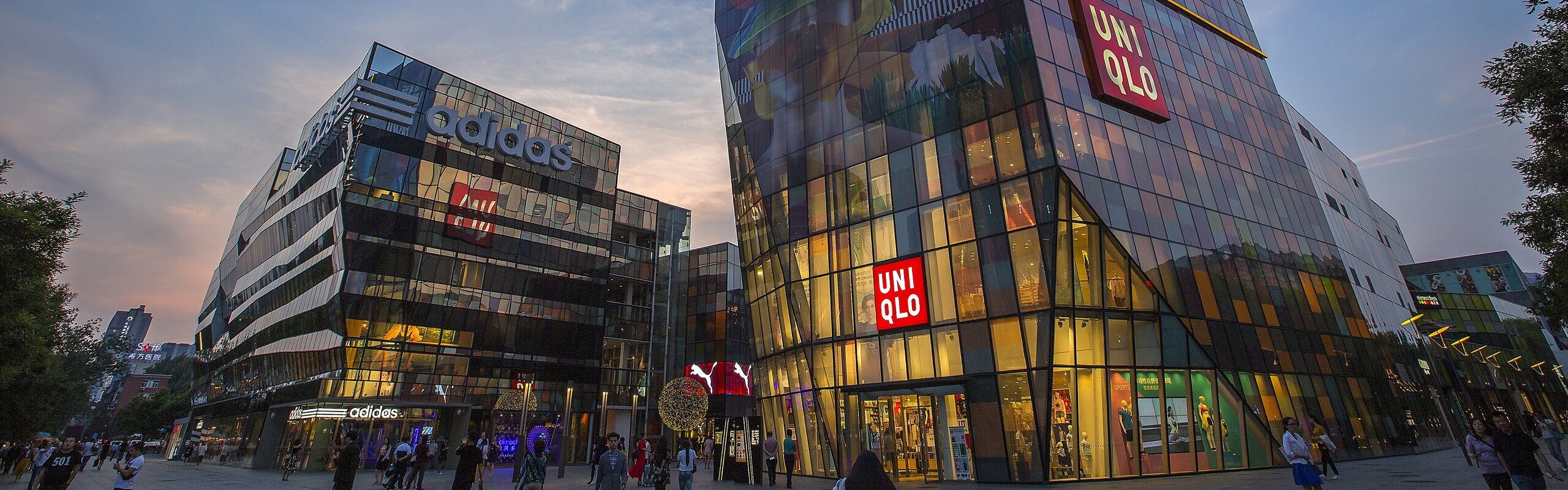
Sanlitun in Beijing: Things to Do Beyong Bar Street & Taikoo Li

Sanlitun in Beijing: Things to Do Beyong Bar Street & Taikoo Li

Sanlitun is one of the most famous entertainment areas in Beijing. The main areas in Sanlitun include Taikoo Li, Bar Street, Worker's Stadium, and the embassy district.

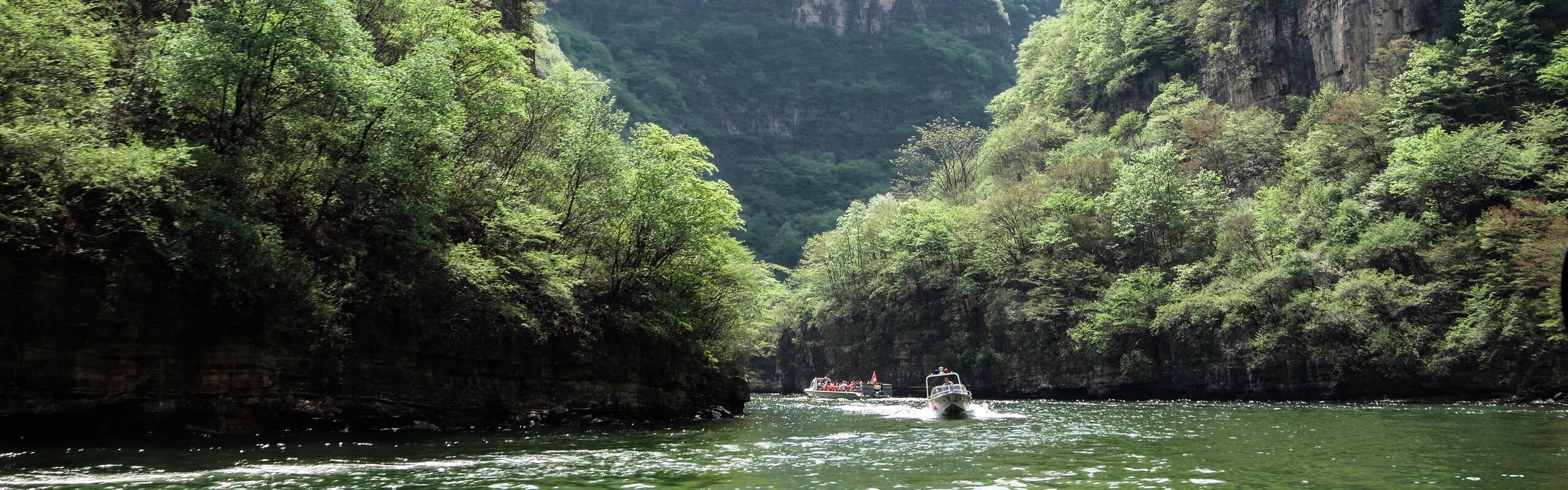
How to Visit Longqing Gorge & Ice Lantern Festival from Beijing

How to Visit Longqing Gorge & Ice Lantern Festival from Beijing

Longqing Gorge is approximately 90 kilometers (2 hours’ drive) from the city center. It is steep with beautiful mountains and clear water. The Ice Lantern Festival of Longqing Gorge is a highlight of the cultural activities in suburbs of Beijing.

Beijing Hutong Zhang Folk Art Museum - Travel China

Beijing Hutong Zhang Folk Art Museum - Travel China

Beijing Hutong Zhang Folk Art Museum offers a window into old Beijing’s traditional customs and local cultures.

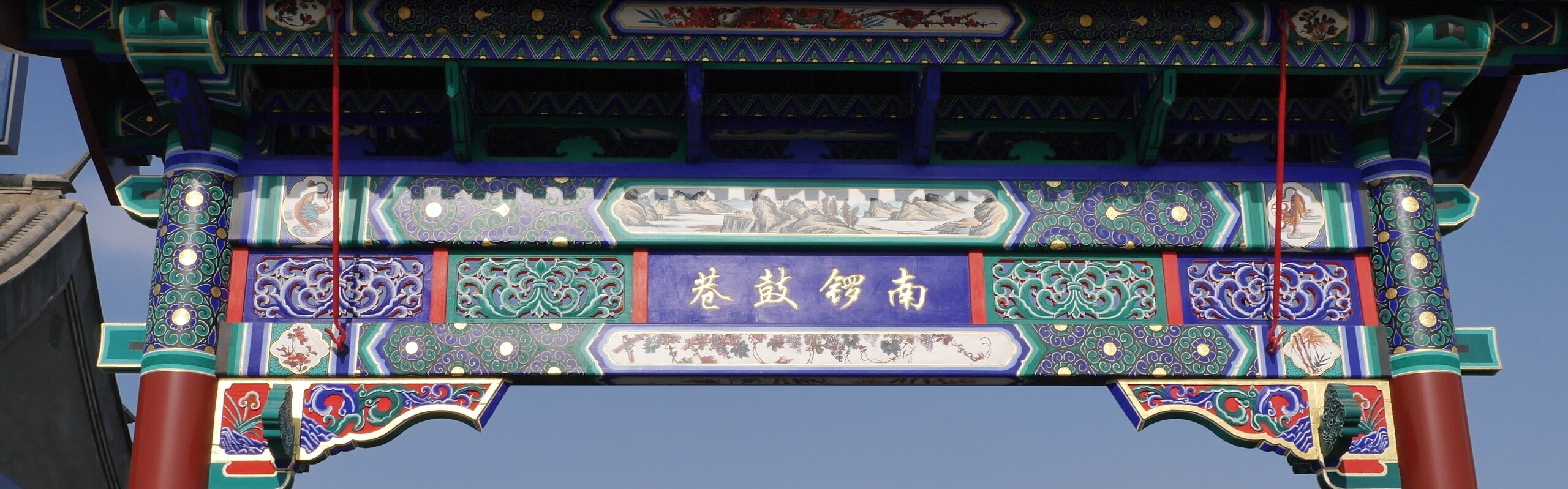
Nanluoguxiang - My Favorite Hutong near the Forbidden City

Nanluoguxiang - My Favorite Hutong near the Forbidden City

The Southern Gong and Drum Lane, Nanluoguxiang, has the reputation of being one the oldest hutongs in Beijing.

Beihai Park in Beijing: Worth Visiting?

Beihai Park in Beijing: Worth Visiting?

Beihai Park may not be as famous as other attractions, but it possesses a unique charm and delicate beauty that sets it apart from the grandeur of other attractions. It is less crowded, and a refreshing escape from the hustle and bustle of city life.

A Global Network of Trust and Recognition

World Travel Awards logo
TripAdvisor logo
TrustPilot logo
PATA logo
CNN travel logo
BBC travel logo
Forbes logo
Australian Geographic logo
TimeOut logo
South China Morning Post logo
Responsible Travel logo
Travel Stride logo
Connect with your personal advisor
to start your journey.Start Your Journey

Let the Journey Come to You

Receive our heartfelt stories, travel insights, and special offers -
thoughtfully curated and sent to your inbox.

Click to Subscribe

Why Travel China

Our Belief, and the People Who Bring It to Life.

Our Belief

Highlights Happen When We Get Closer.

Close to Nature
Close to Nature
Your phone's wallpaper,
but you are in it.
Close to Culture
Close to Culture
Live it,
don't just list it.
Close to People
Close to People
Know yourself better by
knowing others.

Our Promise

A 4-on-1 Team Dedicated to You.

YOUR PERSONAL TRAVEL DESIGNER
"
We're Travelers First, Planners Second.
YOUR PERSONAL TRAVEL DESIGNER

Deeply rooted in Asia for authentic advice. Passionate about crafting your unique story.

YOUR LOCAL
STORYTELLER
"
We share the stories you won't find in a guidebook
YOUR LOCAL STORYTELLER

Connecting you with the top 20% of local storytellers. Your personal photographer for cherished moments.

YOUR PRIVATE DRIVER
& CAR
"
20% more space, 100% on your schedule.
YOUR PRIVATE DRIVER & CAR

A seamless journey that moves at your own pace. Your private, comfortable space on the road.

YOUR 24/7
TRAVEL SUPPORT
"
Any Problem, Anytime, Anywhere.
YOUR 24/7 TRAVEL SUPPORT

Your safety and peace of mind are our priority. Instant responses, so you're never left waiting.